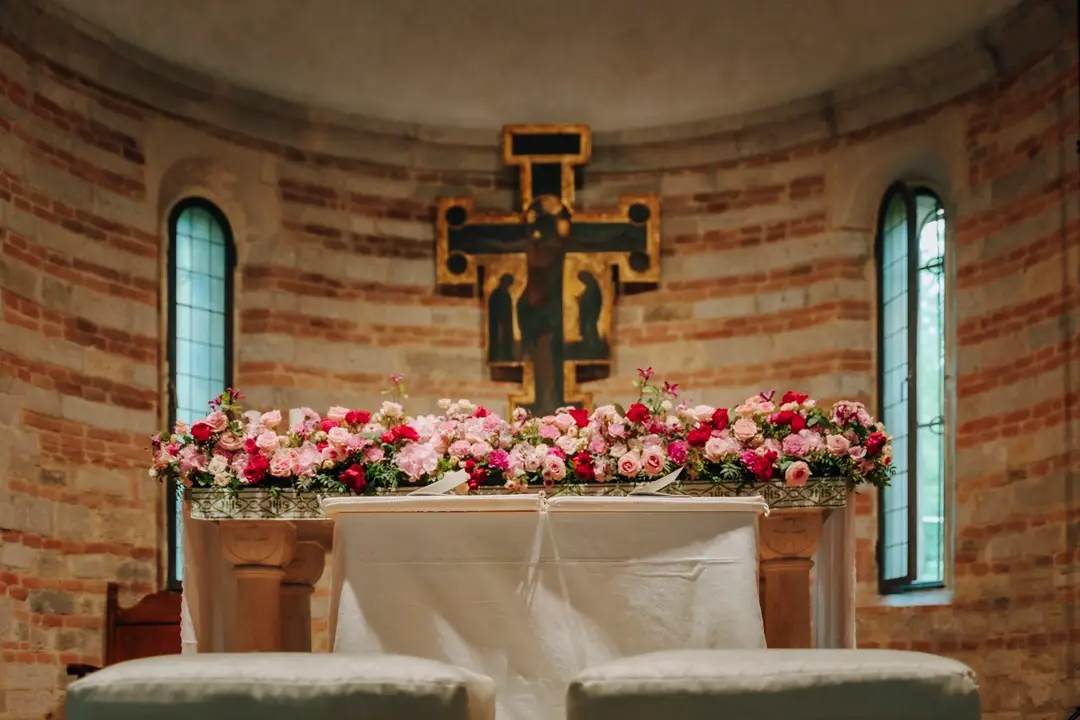
Celebrating a Catholic wedding in Italy is, for many couples, the most meaningful way to seal their union. Beyond the beauty of historic churches and timeless landscapes, a Catholic ceremony carries a profound spiritual significance, which involves careful preparation and respect for ecclesiastical procedures.
If you are considering a destination wedding in a church in Italy, it is essential to understand how the process works, what documents are required, and why coordination with the Italian Curia is a fundamental step. Let us guide you.
Some clarifications about Catholic destination wedding in Italy
Before going into the requirements for a Catholic wedding in Italy, it’s important to clarify a few aspects.
First of all you should know that, if you have been married in the Catholic Church, have divorced, and your marriage was not officially annulled, then you cannot get married with a Catholic ceremony again.
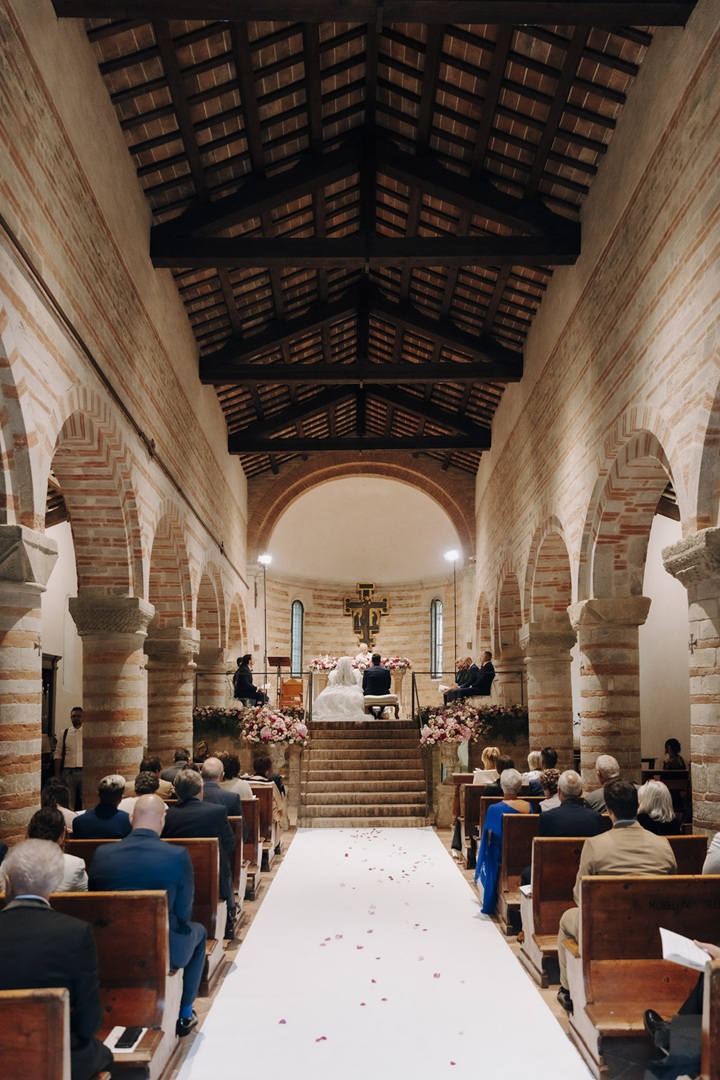
Moreover, you won’t be allowed to celebrate the wedding wherever you want (for example outdoors). Catholic ceremonies can take place only in consecrated churches or authorized chapels. Consider also that not all Italian priests speak English, so you might need an interpreter during the ritual.
This said, you might find yourself in one of these two main scenarios.
Most international couples choose to get legally married in their home country and then celebrate a Catholic ceremony in Italy without civil validity. This is often the most efficient option, as it simplifies the process and allows greater flexibility.
If, instead, you wish to have a Catholic ceremony with civil legal value in Italy, the procedure becomes significantly more complex and requires additional legal coordination. This is a different scenario, typically handled as a separate process.
In this article, we focus on the most common case: couples who are already legally married and come to us because they wish to celebrate a Catholic ceremony in Italy.
Catholic wedding in Italy: requirements and documents
The documentation required to get married in Italy in the Catholic Church follows some general rules, but must always be confirmed with the Italian Curia (specifically with the Chancellery Office, which is the dedicated department). Each Diocese has the final authority and may request specific variations.
For a standard Catholic ceremony where both partners are Catholic, the required documents include:
- updated baptism certificates (issued within the last 6 months)
- confirmation certificates
- certificate of free ecclesiastical status (proving no religious impediments)
- pre-marriage course certificate (Pre-Cana)
- prenuptial inquiry (canonical interview) completed with your parish priest and sealed by the Bishop
- formal letter of delegation from your parish priest allowing the ceremony to take place in Italy
- authorization from the Bishop (highly important)
All documents must be original and, in most cases, stamped or sealed by the Bishop’s office.
It is important to note that documents’ translation into Italian isn’t always required: this depends on the Curia, which must review and approve the documentation before the wedding.
In addition to this paperwork, you will also need to provide the details of your witnesses: their full name, date and place of birth, and profession.
Mixed marriage: when one partner is not Catholic
Sometimes a couple might wish for a Catholic destination wedding in Italy even though one partner is not baptized, or not Christian at all.
In this case, additional documentation is required for that specific partner. For instance:
- declaration of non-baptism (if applicable)
- declaration of free status
- formal commitment to respect the Catholic faith of the other partner
- agreement on the Catholic upbringing of children
- episcopal dispensation for disparity of cult (this is the key document which allows the Catholic partner to marry a non-Catholic one)
This dispensation is issued by the Bishop in your home country and is essential for the Catholic Church in Italy to authorize the ceremony. Without it, the Catholic wedding cannot proceed.
Civil marriage certificate: why and when it is required
If you are getting married with a civil ceremony in your home country and would like to celebrate a Catholic wedding in Italy, you need to provide the original civil marriage certificate (not just a copy, license or application).
In some cases, if the official certificate is not yet available, an affidavit confirming the legal marriage may be temporarily accepted. This option, though, depends on the Curia, so it should be verified in advance.
Timing and deadlines
When planning a Catholic wedding in Italy, timing is an important factor. Here are a few things to keep in mind:
- most documents must be issued within 3 to 6 months before the wedding;
- the Italian Curia usually requires all paperwork at least 6–8 weeks in advance;
- International shipping between Dioceses can take time and should not be underestimated.
Starting the process early, ideally several months before the wedding, and with professional guidance is essential to avoid last-minute complications.
The role of the Italian Curia in a Catholic wedding
One of the most important, and often overlooked, aspects of a church wedding in Italy is the role of the Curia (Diocese).
After you have collected all the documents listed above, the Italian Curia must:
- review the entire documentation;
- confirm that everything complies with local requirements;
- grant final authorization for the ceremony.
This is why it is not enough to rely on general guidelines found online: each case must be verified directly with the Diocese where the wedding will take place.
In our experience as destination wedding planners, this step is where many couples encounter delays or misunderstandings if not properly guided. Relying on the help of professionals, like us, makes the process smoother and the outcome safer.
Why professional guidance matters
Organizing a Catholic wedding in Italy from abroad is not just about collecting documents. It requires:
- coordination between your local parish, your Bishop and the Italian Curia;
- verification of paperwork and deadlines;
- clear communication between all parties involved.
At Paolo Cicognani Exclusive Experiences, we guide couples through this process with a structured and precise approach. We liaise with the Italian Diocese, verify requirements case by case and ensure that everything is in place well in advance.
This allows you to focus on the meaning of the ceremony, rather than the complexity behind it.
In fact, a Catholic wedding in Italy is probably not the simplest option from a logistical perspective. But for couples like you, who value its spiritual significance, it is an experience of extraordinary depth. With the right preparation and guidance, the process becomes clear and manageable.
Because when everything is handled correctly, what remains is the essence of the moment: a meaningful ceremony, in one of the most beautiful settings in the world. Get in touch with us to start planning your Catholic wedding in Italy.